Skip to main content
 How to file your Self Assessment tax return with HMRC
The 31st January deadline for filing your Self Assessment tax return for the 2021/22 tax year is fast approaching. Fortunately, there are a few ways you can file your completed tax return with HMRC.
Before you file your return
If you have to file a tax return, you’ll need to register for Self Assessment with HMRC.
The deadline for registering for Self Assessment for the 2021/22 tax year was 5th October 2022. If you haven’t yet registered but need to send a return, you should make registering a priority.
If you miss the 31st January deadline for filing, HMRC is likely to charge you a penalty, so we’d recommend you register as soon as possible. You can find out more about how to register for Self Assessment in our handy guide.
How to file your return
Once you’ve registered for Self Assessment with HMRC, you’re ready to complete and file your tax return. There are a few ways you can do this:
Using FreeAgent
If you use FreeAgent (or other accounting software) to manage your books, you may be able to file your Self Assessment tax return to HMRC via the software. You’ll still need to register for Self Assessment via the gov.uk website to let HMRC know to expect a tax return and set up a Government Gateway account.
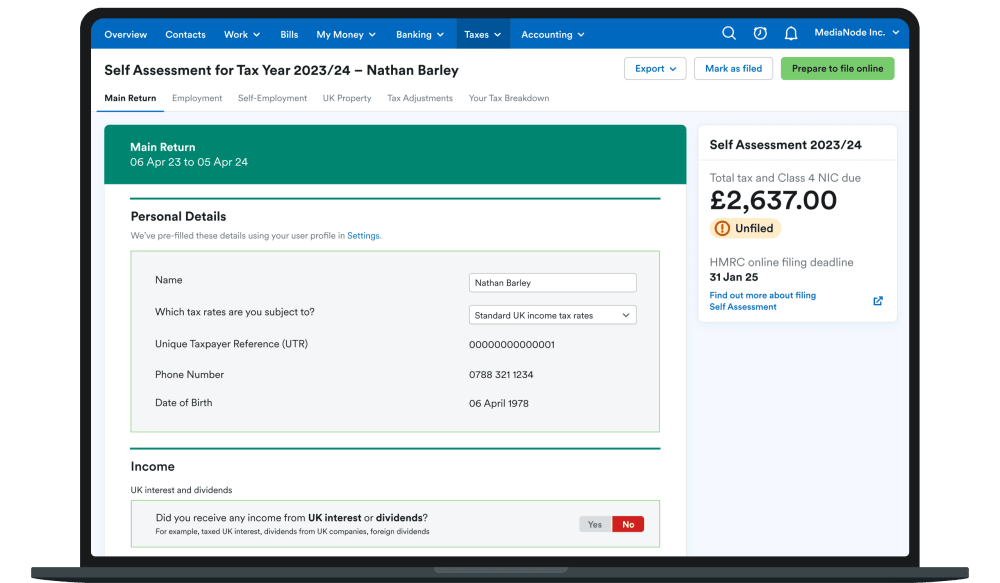
As you go about your daily business, FreeAgent works in the background to calculate your Self Assessment liability and prepare your tax return. This means a significant percentage of your forms should already be completed when it’s time to file.
Once you’ve completed your return, you can file your tax return directly with HMRC by clicking ‘File online with HMRC’ and entering your Government Gateway user ID and password.
Online via the HMRC website
You can submit your tax return online via the HMRC website. In order to do this, you’ll need to create a Government Gateway user ID and password, and use these to log in. You can find more information about how to do this on the HMRC website.
Once you’ve registered and logged in, you can complete and file your tax return. The return should include details of your income and deductions you are claiming (such as expenses) as well as any other necessary information. We’ve compiled a handy list of all the things you should need to complete a Self Assessment tax return, but recommend that you check with an accountant if you’re in any doubt about what to include.
By post
Important:The deadline for submitting a paper tax return to HMRC for the tax year 2021/22 was 31st October 2022. You may have to pay a penalty for any tax returns filed after this date.
You can also file your Self Assessment tax return by post. To do this, you’ll need to complete the relevant paper tax return forms and send them to HMRC. You can download the forms you need from the HMRC website.
Once you’ve completed the forms, you should double-check that you have included all the necessary information and documentation, such as proof of income and expenses.
Once you’re happy that everything is correct, you should send the completed form and any attachments to the appropriate address. The address of the office to send your tax return to should be listed on any recent letters you’ve had from HMRC.
If you don’t have any recent letters from HMRC, you can send your completed return to:
Self Assessment
HM Revenue and Customs
BX9 1AS
United Kingdom
File it with confidence
Take a 30-day trial and join the 9 out of 10 business owners who feel more confident about their business’s finances when they use FreeAgent.*
*FreeAgent’s Small Business Monitor survey, Summer 2022
Originally published
Last updated
Disclaimer: The content included in this blog post is based on our understanding of tax law at the time of publication. It may be subject to change and may not be applicable to your circumstances, so should not be relied upon. You are responsible for complying with tax law and should seek independent advice if you require further information about the content included in this blog post. If you don't have an accountant, take a look at our directory to find a FreeAgent Practice Partner based in your local area.