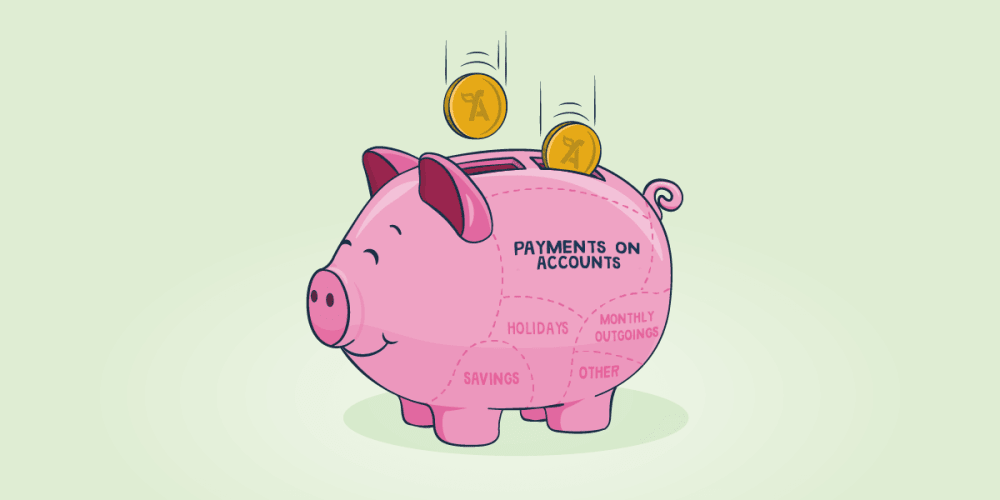
Self Assessment: Payments on account

Posted on 08 December 2009 by Comments (23)

Are you a UK taxpayer? Is less than 80% of your income tax paid at source (i.e. taken off before you get the money - as it is with your salary when tax is deducted under PAYE, or with most bank accounts)? You may well be told by HM Revenue to make "payments on account".

What on earth are those? How are they worked out, and when are they due?

What they are

Briefly, they're payments towards your next year's income tax.

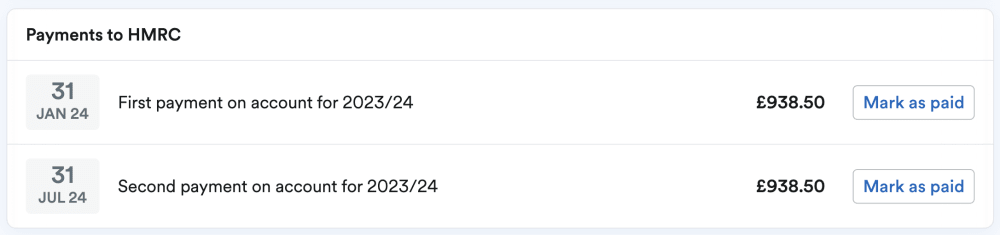
So on 31st January 2010 and 31st July 2010, you may be told to make payments on account towards the tax you're going to have to pay on your income for the tax year 2009/10.

How they're worked out

Half the previous year's tax bill for each payment.

So if your tax bill for 2008/09 was £1,500 (you only have to make payments on account if your tax bill is over £1,000 now - that used to be £500 but for 2008/09 and later years it's £1,000), then each payment on account would be £750.

When they are due

31st January during the tax year, and 31st July soon after its end.

What if I pay too much on account?

HM Revenue will give you the difference back. They'll either do this by cheque or bank transfer, or by deducting the difference from your next tax bill.

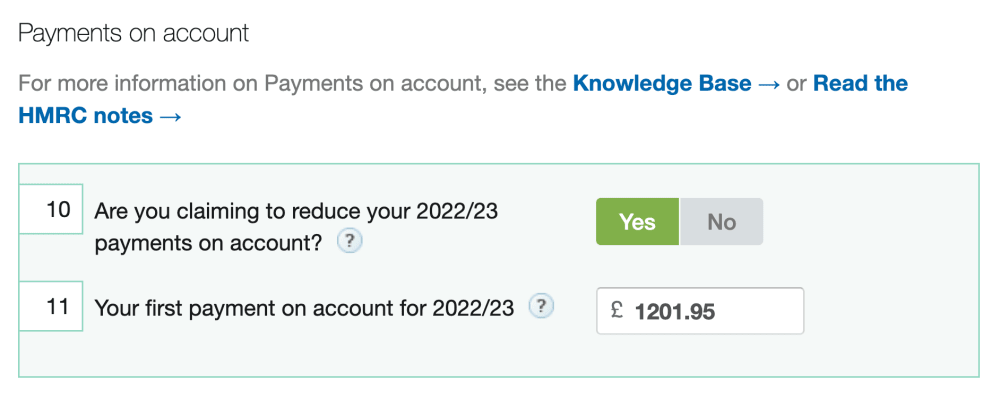
If you know in advance that you're going to pay too much on account because you know your tax bill will be lower next year, perhaps because you're winding down your business and your income will drop, or you're passing retirement age and no longer have to pay class 4 National Insurance, then you can apply to HM Revenue to reduce your payments on account.

Click here to find the form to do this.

Be warned though, if you reduce your payments on account too far HM Revenue will charge you interest and penalties for underpaying your tax.

What if I don't pay enough on account? I haven't reduced them

So taking the above example, you've paid £1,500 on account for 2009/10.

Let's say when you come to do your tax return, you find you're actually due to pay £1,700.

Don't worry, all you'd do is to pay the difference to HM Revenue by the following 31st January, so that would be a payment of £200 by 31st January 2011. HM Revenue call this a "balancing payment".

Then of course you'd have to make your payments on account for 2010/11 - half of £1,700 each, so £850 each on 31st January 2011 and 31st July 2011.

So you'd pay a total of £1,050 on 31st January 2011.

When they're really nasty

The first year you have to pay them.

This may either be your first year of trading, or the first time your tax bill has gone over £1,000 in a tax year. But then, you'll be paying effectively 1 and a half year's worth of tax on 31st January.

So let's say you began trading in 2008/09 and have a tax bill of £1,400 for that year, and didn't have any tax deducted at source.

That tax bill'd be due for payment on 31st January 2010.

BUT... on 31st January 2010, because your tax bill is over £1,000 you'd also have to make your first payment on account for 2009/10. That's half the prior year's tax bill - £700.

So on 31st January 2010, instead of £1,400, you'll be paying £2,100! Ouch!!

This is one reason why it's a good idea to do your tax return as early as possible so you have time to put money aside!

Over to you...

Andy, Tue December 08, 2009
I personally hate this whole system of paying up front for earnings you are yet to make, seems all too like a "how long is a piece of string?" scenario.

My year before last was good, so this years January payment on account was very high, recession came so business wasn't as good this year so not only did I have the worry of finding work and making enough money to pay the morgage/bills, I had the added worry of trying to find enough money to pay the large payment on account, which I pretty much failed to do. It was only in July that I was told by the accountant that it shouldn't be as high as they were asking.

Why isn't it more of a case of paying tax due based on earnings for Jan to July and August to December instead of that plus the projected earnings for the following year?....surely it would be easier to budget for and save for without the worry of "do I pay my morgage this month or give it to the taxman just incase next year is good, only to be given it back if it isn't".
Emily Coltman, Fri December 11, 2009
Hello Andy,

If you know you're going to have a bad year then you can apply to HM Revenue to reduce your payments on account as soon as you know.

Just don't overcook the reduction or you could be charged interest and penalties.

Avoiding payments on account is one reason why a lot of people choose to trade through limited companies, which don't have to make them when they're small - but that of course means a lot of increased paperwork, legal responsibilities and higher fees.

Whoever said tax didn't have to be taxing was telling a fib :-)

Kind regards,

Emily
Andy, Fri December 11, 2009
I was seriously considering the Limited route for next year partly because of this Payment on Account lark.

That's the big question though, how do you know you're going to have a bad year or not?, do the Government think we can see into the future?....for me it's all been fits and spurts of good and bad months. Maybe I should start buying Duck Houses and get a Mote dug around my flat to claim some back. :)
Emily Coltman, Fri December 11, 2009
Hello Andy,

I guess what HM Revenue think is that the second payment on account is due after the end of the next tax year - so if you do your accounts and tax return within 3 months of the tax year end, you'll know how you did and be able to reduce your payment on account.

In some circumstances you do also have advance knowledge (e.g. you go past State Pension age and can reduce your payments because you'll no longer have to pay class 4 NIC).

That's also an advantage of using FreeAgent, in that if you do your books on an on-going basis you'll have a projection of your tax liability, so that you can start to put money aside.

But I agree, it can be tricky unless you're Mystic Meg :-)

Kind regards,

Emily
Graham T, Thu December 17, 2009
Thanks Emily for explaining clearly how these payments on account work. I tried calling the self assessment hotline to explain them so I could calculate January's bill but I wasn't a lot clearer after my conversation with them. Your explanation has really helped.

Graham.
Paul F, Tue January 05, 2010
I paid on account and need to know where to include the on account payments made on my Self Assessment Form?

Paul
emily, Fri January 08, 2010
@Graham: Thank you!

@Paul: Are you asking where to put these on FreeAgent, please, or on your tax return that you're filing with HM Revenue?
Eddie H, Sat January 09, 2010
Where do I enter in my online tax return how much I paid on account last year ? Does it automatically take this into account ?

Many Thanks in Advance..
Eddie
Ian, Sun January 10, 2010
Hi, I too am looking for info regarding where to 'account' for payment on account. I havnt done an on line return before, and I cant find anywhere to put these figures in? (filing with HM revenue).

Thanks - Ian.
emily, Thu September 09, 2010
@Eddie, @Ian: Apologies for not responding till now!

This is something we unfortunately can't help with, as we don't use the HM Revenue online form to file tax returns - I use specialist tax software which automatically talks to HM Revenue.

Kind regards,

Emily
sam, Mon January 03, 2011
Has anyone got an answer to the last question, relating to accounting for the payment on account paid in the previou yeare?
David, Sat January 08, 2011
YES PLEASE! i am also looking for where to "accoutn" for the amounts already paid on account - HELP PLEASE!
emily, Sun January 09, 2011
Hello,

You'd need to explain these payments in FreeAgent as Money Paid to User > Drawings.

Kind regards,

Emily
Bert, Wed January 19, 2011
Hi there. Payments on account are indeed rubbish. But I guess after the first year, it makes things slightly easier... if the HMRC made it easy to understand! I've just done my tax return online and I have enough to cover my total, but HOW DO I DEDUCT THE PAYMENTS ON ACCOUNT?! I've essentially covered this year's tax with the amount I paid in my two instalments last year. But I can't I find where to take them off my total! I called HMRC and they said 'oh it'll come off your statement when you submit your return.' But I've submitted it and when I 'view my calculation' there's no reference to my PoA aside from saying "This calculation does not take into account any 2009-10 payments on account you may have already made". HOW do I MAKE it take them into account? I am very confused and somewhat fed up of the whole affair. I will never again be self employed. Come back PAYE all is forgiven!
Bert, Wed January 19, 2011
Hmm. Just read all the other posts and it appears several people are in the same boat, but unable to get answers here. I shall persevere. Good luck all!
emily, Thu January 20, 2011
Hello Bert,

Are you stuck with filling in your tax return online - and you can't find where to put in the money you've already paid to HMRC?

As opposed to not knowing how to explain those payments in FreeAgent?

Kind regards,

Emily
gandalf, Fri January 21, 2011
hi as far as i can remember right at the end when you view the calculation and enter the amount you wish to pay, deduct your payment on account then and enter the figure your left with into the box. thats what you pay online. there isnt a automatic deduction for payment on account and you have to just enter the figure into the amount you wish to pay box. thats what i did last year and the year before and it was ok.
Rozzer71, Sun January 30, 2011
I agree with gandalf - you take the POA off when paying money owed...... can i confirm gandalf if it is both the Jan and July payments on account you deduct?
Thank you
emily, Sun January 30, 2011
Hi folks,

Gandalf is right (having seen some screenshots of HM Revenue's online filing software).

The software will work out your total tax due for the year but will NOT take payments-on-account that you've already made, into account.

So let's say you paid £750 on account for 2009/10 on 31st January 2010, along with a balancing payment of £200 for 2008/09.

Then you paid another £750 on account for 2009/10 on 31st July 2010.

HM Revenue's software then tells you that you have £1,600 to pay for the tax year 2009/10, plus payments on account of £800 each for 2010/11.

The question is "How much do I need to pay on 31st January 2011 in that case?!"

And the answer is: £900.

How did I work that out?

Total due for 2009/10 £1,600
Less payments on account:
31st January 2010 (£750)
31st July 2010 (£750)
Remaining due for 2009/10 £100

Plus first payment on account
for 2010/11 £800

Total due 31st January 2011 £900

"But I paid £950 on 31st January 2010."

£200 of that was a balancing payment for the previous tax year - like the £100 you're paying now - so you don't take that bit off.

Does that help, please, folks?

Kind regards,

Emily
rozzer71, Sun January 30, 2011
Thats FAB Emily just can't quite get my head around the ;ast bit..... why u paid an extra £50???
emily, Mon January 31, 2011
Hi there,

The £950 was what I paid on 31st January 2010 (£200 as a balancing payment for 2008/09, £750 for the first payment on account for 2009/10).

On 31st January 2011 (today!) I'll pay £900 - £50 less.

Does that help, please?

Kind regards,

Emily
Mark, Mon January 31, 2011
Hi,

I have a question that I hope someone can help with.

I was working as a contractor for some months and was actually a shareholder in the parent company, this way I was only getting paid a minimum salary and PAYE but was taking a cash dividend with each weekly payment.
I would get a weekly payslip which would show my basic salary and also my gross dividend.

In the deductions section I have my PAYE (small as I was on a low salary), but also a quite significant deduction labelled as 'Tax Liable on Profits', i.e. my dividend payment. Therefore I know I have paid tax on all my dividend payments I received.

However, doing the self assessment form on-line, I have done the following:
1 - Entered in the PAYE salary and deductions.
2 - Entered in the total dividend paid.

The problem is that I cannot see anywhere to enter in the tax that I have been paying each week on my dividend. Due to this, the calculation is saying I owe a large amount of income tax - which I already belive I have paid.

Has this anything to do with the line 'This calculation does not take into account any 2009-10 payments on account you may have already made' that appears at the bottom of the calculation?

Thanks for any help you can provide.

I have been doin m
Jamie, Tue February 22, 2011
Hi,

I have just received a penalty for reducing a Payment on Account too much. I reduced the POA as I knew i was going to be paying less tax as I was making a transition from Self employed to a LTD Company. The amount i reduced can't have been more than a few £100 less than what i ended up paying. But then i get over a £100 fine in "interest" and penalties.

What completely annoys/confuses me is trying to understand why they penalise you for giving them "too little" of money that actually isn't 100% there in the first place. Any amount of money that we pay in POA should be taken and they should be f***ing grateful for it. Not penalising because you were out by a few hundred quid.

And with all their extra "projected" £'s, they couldn't even send me out an accurate letter explaining the situation - just a generic PENALTY notice.

Well. It feels great to get that off my chest.

Have a great day..

Cheers

Jamie
(Comments closed)

Recent Posts

Twitter Love

  • Thanks to @freeagent I will never need to use the crappy HMRC payroll software come April.

  • all sorted and ready for PAYE RTI thanks to @freeagent awesomeness.

  • The latest reason why I continue to love @freeagent http://t.co/nfYqVJDfa4 HMRC chucks a stress out at businesses, FreeAgent bats it away!

  • Those folks @freeagent do it right. The confirmation mail includes important information: http://t.co/HCHIvgjpI0

  • @NickClement @freeagent its excellent for invoicing, very flexible & easy - esp billable time by task from timeslips-capture the revenue!

Follow:

Escape spreadsheet hell with FreeAgent.

Try FreeAgent for Free